Analysing the discus throw
- The discuss throw is split into five phases: First double support phase, first single support phase, airborne, second single support phase, second double support phase and delivery phase (Dinu et al., 2019)
- Several biomechanical factors influence the success of the discus throw, including the angle, speed, height, and direction of release. The optimal angle of release is around 35 degrees, which allows for maximum throwing distance. The speed of release is influenced by the rotational speed of the thrower and the release angle.
- The biomechanical factors of technique differ between male and female discus throwers. For male discus throwers, the hip-shoulder separation should be low to 0 in the beginning of the throw up until the second single support phase, then the hip-shoulder separation should be as big as possible to generate as much force on the discus as possible. For female discus throwers, the hipshoulder and shoulder-arm separations during the flight phase, as well as the forwardbackward tilts of the trunk at the beginning and end of the throwing procedure, are significant parameters associated with performance of the throw (Leigh and Yu, 2007)
What do we do?
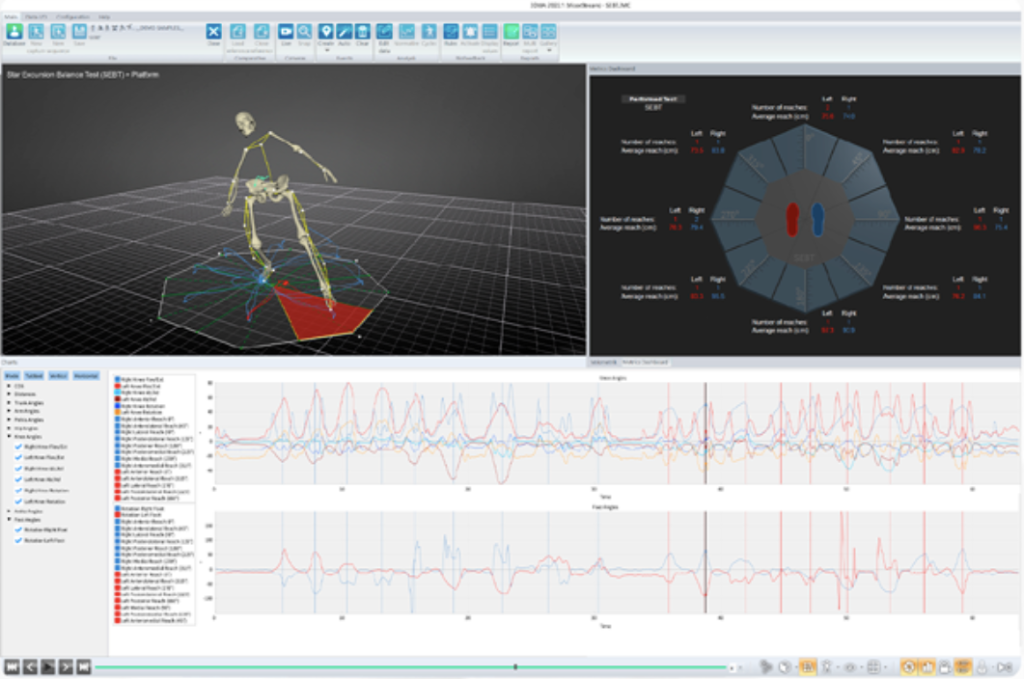
A screenshot of our analysis.
The use of motion analysis software, such as 3D optical capture systems, has become increasingly popular in the world of sports. These tools provide sub-millimetric precision in measuring the movement of the human body, which can help coaches and biomechanics experts improve performance, prevent injuries, and optimize training plans.
Overall, motion analysis software has become an essential tool for coaches, sport scientists, and biomechanics experts to improve performance, prevent injuries, and optimize training plans. Its relatively simple workflow allows them to analyze various sports functions, including cycling, running, golf swing, gait, and vertical jump, providing immediate and visual results
The Process of Analysing
Due to the flexibility of our system, we can both set up our system in your indoor training hall or measure you outside.
- Calibration
The system is calibrated with tha help of a rod that has equally-spaced markers. This makes the readings of the ruslets incridebly accurate with lower than 1mm calibration volume. - Markers
Markers are set up on most of the ligaments on the correct position for the most accurate readings. - Perform the throw
The thrower performs the throw. - Data analysing / Results
We go through the throw and analyse what is happening with the technique you have and what could be better.
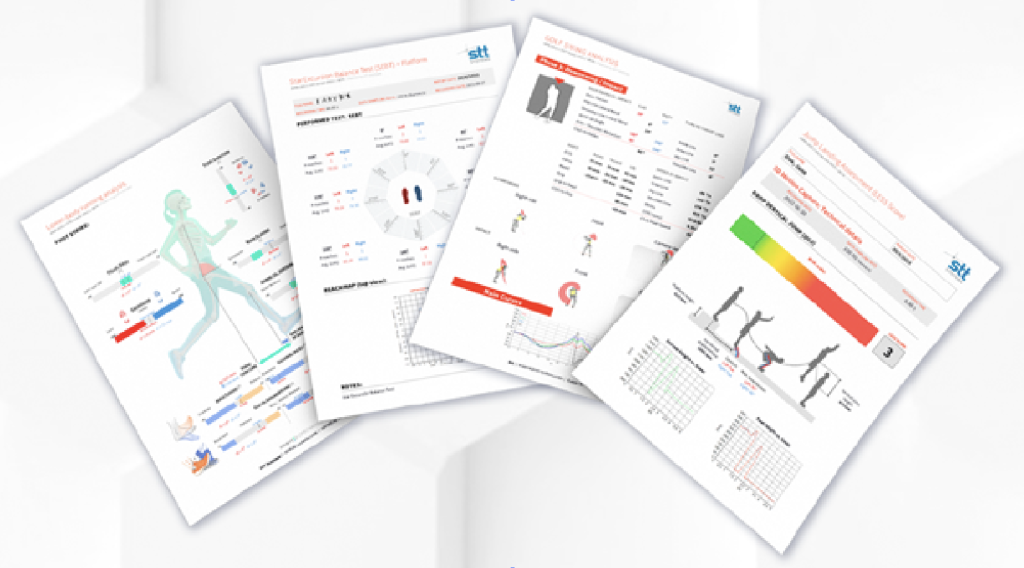
A screenshot of our analysis.
